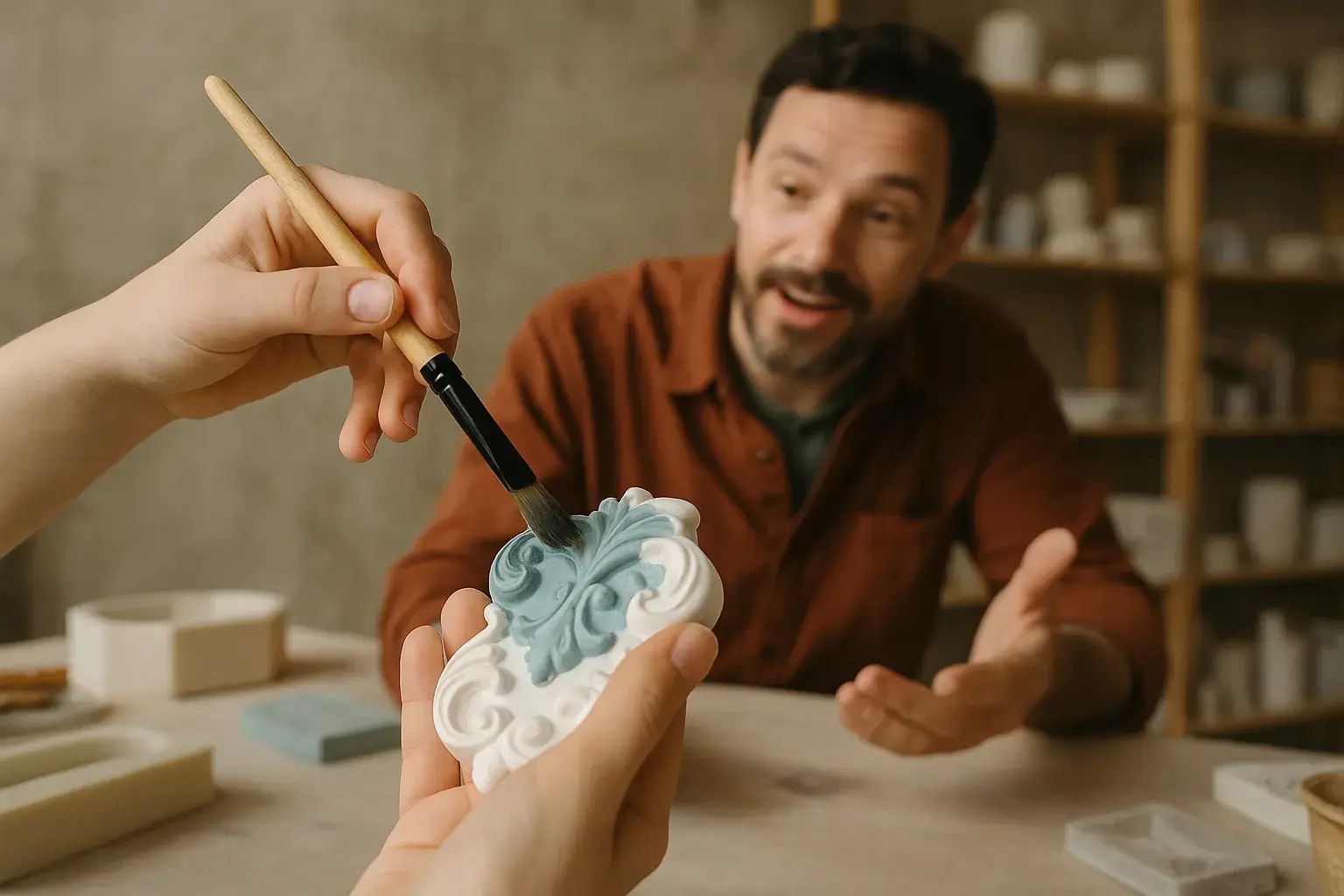
Learn by Doing in Yaroslavl: Concrete & Gypsum Casting, Silicone Mold Making, and Candle Crafting
Discover tactile, practical workshops that teach concrete and gypsum casting, silicone mold making, and candle crafting in Yaroslavl. These skills are ideal for hobbyists, makers, gift-makers, and small-business starters. Whether you’re drawn to textured concrete planters inspired by Volga stone, delicate gypsum reliefs echoing Yaroslavl’s architecture, or scented candles for cozy evenings, hands-on learning turns ideas into finished pieces you can keep or sell.
Why choose hands-on workshops?
— Immediate practice: make a complete object in one session and learn each step by doing.
— Faster skill retention than passive classes—mistakes become lessons.
— Community: meet local makers and get insider tips on suppliers, markets, and events.
— Great for gifts, home décor, or launching a micro-business.
—
What you’ll learn — overview by craft
Concrete casting (decorative & functional)
— Core skills: mixing ratios, additives (fibers, pigments), vibration/degassing, demolding, surface finishing, sealing.
— Typical projects: small planters, trivets, candle holders, coasters, textured panels inspired by Yaroslavl motifs.
— Materials: cement or ultra-high-performance concrete mixes, pigments, release agents, reinforcing mesh or fibers, silicone or reusable molds.
— Time & difficulty: 2–4 hour introductory sessions; curing times up to 48 hours for full strength.
— Safety: dust mask for dry mixing, gloves, eye protection, avoid skin contact with wet cement.
Gypsum casting (plaster & ornamental work)
— Core skills: mixing plaster (gypsum) to correct consistency, pouring techniques, working with detail moulds, sanding and painting.
— Typical projects: bas-relief medallions, decorative tiles, small statues, picture frames.
— Materials: gypsum/plaster of Paris or casting plaster, release agents, pigmenting paints, sealers.
— Time & difficulty: 1–3 hour sessions; demolding within an hour depending on plaster type.
— Safety: wear a dust mask when sanding; avoid inhaling plaster dust.
Silicone mold making (for repeat casting)
— Core skills: master preparation, bonding and barrier techniques, measuring and mixing silicone, curing, undercuts and two-part molds.
— Typical projects: making a silicone mold from a handmade master (for resin, concrete, gypsum, wax), designing pour channels and vents.
— Materials: addition- or condensation-cure silicone, mold boxes, clay for registration keys, release agent.
— Time & difficulty: 2–6 hour sessions (silicone cure times may require leaving the mold overnight).
— Safety: gloves, good ventilation when using certain silicones; follow manufacturer instructions.
Candle crafting (container, molded, and artistic)
— Core skills: wax types (paraffin, soy, beeswax), melt & pour vs. free-pour, wicking choices, fragrance & colorant usage, mold release.
— Typical projects: scented container candles, pillar candles from molds (using silicone molds), layered and carved candles.
— Materials: wax, wicks, fragrance oils or essential oils, dyes, thermometers, molds or containers.
— Time & difficulty: 1–3 hour workshops; cooling time varies by size.
— Safety: temperature control to avoid hot-wax fires, use of heavy-duty heat source, keep water away from hot wax.
—
Sample one-day workshop schedule
— 10:00 — Welcome, safety briefing, demo
— 10:30 — Hands-on: prepare materials & masters (concrete/gypsum/candle core steps)
— 12:00 — Lunch break
— 13:00 — Molding or casting session (pouring into molds)
— 14:30 — Finishing demos (sanding, painting, sealing; wick-centering for candles)
— 15:30 — Demolding (if possible) and feedback
— 16:00 — Packaging, photography tips, market/advice on selling
— 16:30 — Q&A, local resources & next steps
—
Where to learn in Yaroslavl
Look for classes at:
— Local art studios and maker spaces
— Cultural centers and community education programs
— Museums with hands-on workshops (seasonally)
— Private tutors and small groups advertised on social networks
How to find them:
— Search VKontakte, Instagram, and local event listings (Afisha Yaroslavl, City portals)
— Check community bulletin boards at cultural centers, universities, and craft shops
— Ask at local markets and craft fairs—many vendors run workshops or can recommend teachers
—
Costs & formats
— Single taster workshops: roughly 800–3000 RUB (materials included) depending on craft and duration.
— Multi-session courses: 4–8 classes often priced from 5000–15000 RUB.
— Private lessons and corporate team-building vary widely; expect higher per-person rates but tailored programs.
—
What to bring / how to prepare
— Old clothes or an apron; closed-toe shoes for studio work.
— Notebook or phone for photos and measurements.
— If you want to personalize: small objects to create silicone molds from (non-porous and clean).
— Bring a jacket—some studios are cool to speed up curing.
— Language: most workshops are in Russian; ask if an instructor offers English help if needed.
—
Safety & sustainability
— Always wear recommended PPE: masks for dust, nitrile gloves for resins/solvents, goggles for splashes.
— Ventilate when working with solvents, silicones, or hot wax.
— Choose eco-options where possible: soy or beeswax instead of paraffin; recyclable packaging.
— Dispose of excess materials according to local regulations—don’t pour chemicals down drains.
—
Turn your hobby into sales (local tips)
— Price items by material cost + time + overhead; research local market prices.
— Sell at weekend markets, seasonal festivals, and on VK groups or Instagram.
— Packaging: simple kraft boxes with a paper label and care instructions make a professional impression.
— Story sells—mention Yaroslavl inspiration (Volga textures, historic motifs) and the hand-crafted process.
—
Project ideas inspired by Yaroslavl
— Concrete planter with Volga pebble inlay or wave texture.
— Gypsum bas-relief featuring Rostov-like architectural silhouettes for a wall plaque.
— Silicone molds capturing carved wooden patterns seen in local izbas for repeat casting.
— Scented candle line named after seasons on the Volga—pine-bergamot winter,